

Advance Cataract and Premium Lenses
Advance Cataract and Premium Lenses?
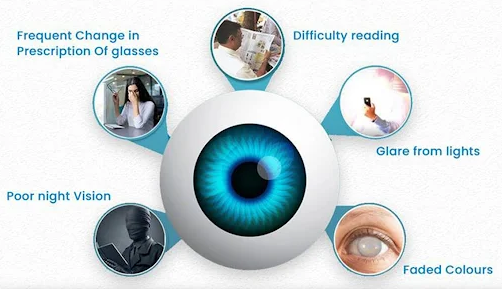
Cataract is a condition where the natural lens of the eye becomes cloudy, leading to blurry vision, glare, difficulty seeing at night, and sometimes faded colors. It usually develops slowly with age but can also be caused by injury, diabetes, or long-term steroid use.
What is a Cataract Surgery?
Cataract surgery is a safe and quick procedure where the eye’s cloudy natural lens is removed and replaced with a clear artificial lens, restoring sharp vision and improving quality of life.
The Symptoms of Cataract :
Tests Required for Cataract Diagnosis :
Visual Acuity Test – Measures how well you see at different distances
Slit Lamp Examination – Allows detailed viewing of the lens and eye structures
Dilated Eye Exam – To examine the retina and lens clarity
Tonometry – Measures eye pressure
Biometry/IOL Master – Measures the eye’s length and shape to select the correct intraocular lens (IOL)
Treatment: Cataract Surgery:
The only effective treatment is cataract surgery, where the cloudy lens is removed and replaced with a clear artificial intraocular lens (IOL).
Types of Cataract Surgery:
Phacoemulsification (modern, micro-incision technique)
Laser-assisted Cataract Surgery (advanced and blade-free)
Manual Small Incision Cataract Surgery (SICS) (for mature or hard cataracts)
Recovery Time:
Most patients resume normal activities within 1–3 days
Full recovery typically occurs within 2–4 weeks
The Causes of Cataract :
Aging
The most common cause. As we age, the proteins in the eye’s lens break down and clump together, causing cloudiness.
Diabetes
High blood sugar can lead to early onset of cataract by affecting the lens’ clarity and fluid balance.
Long-term Steroid Use
Prolonged use of corticosteroid medications (oral or eye drops) can accelerate cataract formation.
Eye Injuries or Trauma
Direct injury to the eye may damage the lens or lead to swelling, increasing the risk of cataracts.
Prolonged UV Exposure
Chronic exposure to sunlight’s ultraviolet rays can speed up lens degeneration.
Smoking & Alcohol
These habits produce oxidative stress, which damages lens proteins and increases cataract risk.
Family History
A genetic predisposition can increase the likelihood of developing cataracts at an earlier age.
Previous Eye Surgery or Radiation
Surgeries for other eye conditions or radiation therapy to the head/neck region can trigger cataract development.