

Cornea
What is Cornea?
Often referred to as the “glass of the camera”, the cornea is the eye’s transparent front layer. It plays a vital role in both protecting the eye and focusing light for clear vision. While it appears delicate and glass-like, it is remarkably strong and durable.
The cornea acts as a protective barrier against dust, germs, and harmful substances. Together with the eyelids, tear film, eye socket, and sclera (the white part of the eye), it helps maintain overall eye health and vision.
What Is Corneal Disease?
The cornea functions like a window, allowing and focusing light to enter the eye. It accounts for nearly 65–75% of the eye’s focusing power. Any damage to this layer can significantly affect your vision. Corneal disease refers to a range of conditions that cause clouding, scarring, or distortion of the cornea, potentially leading to vision loss or even blindness if left untreated.
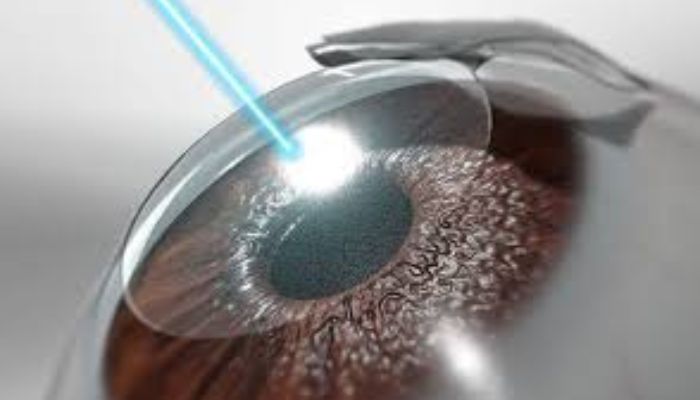
Common Types of Corneal Diseases
Keratoconus: Progressive thinning and bulging of the cornea into a cone shape, causing blurred or distorted vision.
Fuchs’ Endothelial Dystrophy: A genetic disorder affecting the inner corneal layer (endothelium), leading to swelling and clouding.
Bullous Keratopathy: Permanent swelling of the cornea due to damaged endothelial cells, often after surgery or trauma.
Diagnosis
Corneal disease is diagnosed through:
Slit-lamp examination
Corneal Topography – for mapping corneal shape
Pachymetry – for measuring corneal thickness
Specular Microscopy – for evaluating endothelial cell health
Anterior Segment OCT – for high-resolution imaging of corneal layers
Microbiological tests – to detect infections
Our Specialized Cornea Services
We offer a comprehensive range of corneal diagnostics and treatments under one roof:
Corneal Topography (Oculyzer II, Topolyzer)
Specular Microscopy
Pachymetry
Anterior Segment OCT & Photography
Lab Services for Microbial Testing
Customized Contact Lens Clinic
Expert care for allergic, infectious, and immunological corneal disorders
Symptoms of Corneal Disease
Blurred or distorted vision
Increased glare, especially at night
Sensitivity to light
Eye redness, irritation, or discomfort
Difficulty wearing contact lenses
Cloudy or foggy vision (especially in the morning)
Treatment Options
Early-stage corneal diseases can often be managed with medications or specialized contact lenses. Advanced cases may require surgery.
Corneal Transplantation (Keratoplasty) – Full or partial replacement of the cornea with donor tissue.
DSAEK / DALK – Partial-thickness transplants for selective corneal layer replacement.
FALK – Femtosecond-assisted laser corneal surgery for precision.
Corneal Collagen Cross-Linking (C3R) – Strengthens the cornea to treat keratoconus.
Contact Lens Therapy – Customized lenses for distorted or irregular corneas.
Pterygium Surgery – Sutureless technique using tissue glue.
Amniotic & Mucous Membrane Grafting – Used in chemical injuries and autoimmune conditions.
Dry Eye Management – Tailored treatment plans based on detailed evaluation.
Stem Cell Transplantation (SLET) – Restores vision in cases of limbal stem cell deficiency.